
The launch of Wynn Al Marjan Island is already being treated as one of the most important moments in the modern gambling industry. For decades, the Middle East remained outside the global casino economy despite its enormous concentration of wealth, luxury tourism, and ultra-high-net-worth travelers. That balance is now changing. The project in Ras Al Khaimah is not simply another integrated resort with gaming facilities. It represents the arrival of regulated casino entertainment in a region that has historically avoided the sector altogether.
Industry analysts, luxury hotel operators, and VIP gaming executives are watching the development closely because Wynn Resorts is not entering an ordinary market. The company is stepping into a territory where the average spending power of visitors is exceptionally high, where premium hospitality standards already exceed many European and Asian destinations, and where elite tourism continues to expand rapidly. The implications go far beyond the United Arab Emirates itself. The resort may alter how VIP gamblers travel, where junket operators focus their attention, and how competing casino hubs position themselves over the next decade.
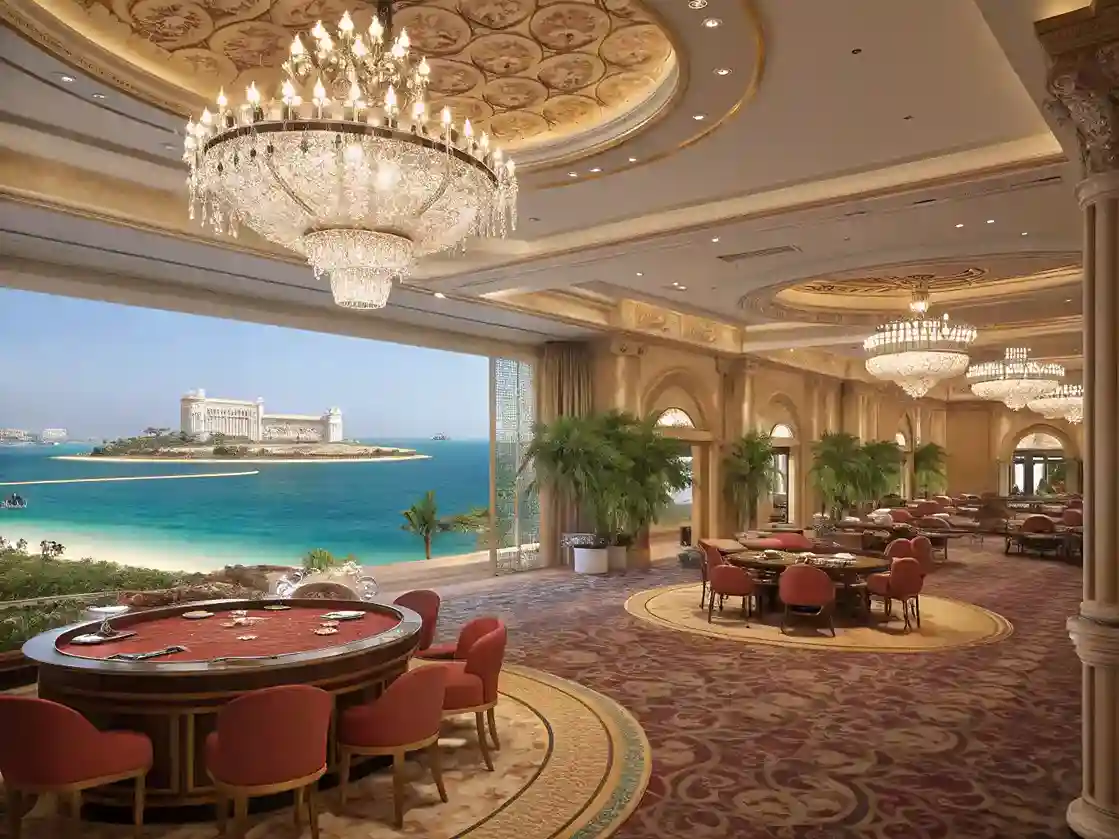
The most interesting part is that Wynn Al Marjan Island arrives at a moment when traditional gambling capitals are facing pressure. Macau continues to recover after regulatory tightening and pandemic-era disruptions. Las Vegas is becoming more entertainment-driven and less dependent on high-roller baccarat. Singapore remains highly controlled and expensive for operators. Into that environment enters a new destination with enormous capital, strong aviation infrastructure, and access to wealthy markets stretching from Europe to South Asia.
Why the UAE matters for global casino operators
The UAE has spent years transforming itself into one of the world’s strongest luxury tourism economies. Dubai alone became synonymous with premium shopping, elite hospitality, fine dining, and high-end entertainment. Millions of affluent visitors already pass through the country every year, including business executives, investors, celebrities, and wealthy tourists from Saudi Arabia, India, Russia, China, and Europe.
What makes the arrival of Wynn particularly important is that the country already possesses the infrastructure casino resorts usually need before they can succeed. In many emerging gaming markets, operators first need to build tourism demand. In the UAE, the demand already exists. The region has luxury airports, global airline connectivity, world-class hospitality workers, massive convention capacity, and an established reputation for safety and exclusivity.
The location also creates a strategic advantage few casino destinations can match. A flight radius of four to six hours from the UAE covers some of the world’s richest and fastest-growing populations. This includes Gulf nations, India, Central Asia, Eastern Europe, and parts of Africa. For VIP gamblers who currently travel to Singapore, London, Monaco, or Macau, Ras Al Khaimah could become a more convenient alternative.
There is another factor making the UAE uniquely attractive: privacy. Wealthy travelers increasingly value discreet luxury experiences rather than overt casino spectacle. The UAE already built its reputation around controlled exclusivity. Wynn appears positioned to integrate gaming into that environment instead of creating a loud, mass-market casino atmosphere.
That difference may redefine how luxury gambling resorts are designed in the future.
How Wynn is positioning the resort for elite gamblers
Wynn Resorts has always focused heavily on premium customers. The company’s reputation in Las Vegas and Macau was built around luxury design, personalized service, and VIP gaming environments rather than aggressive mass-market tactics. Wynn Al Marjan Island appears to continue that strategy while adapting it to regional expectations.
The resort itself is expected to include luxury hotel towers, upscale residential components, high-end retail areas, entertainment venues, fine dining, spa facilities, and gaming areas integrated into a broader hospitality ecosystem. The goal is not to make gambling the only attraction. Instead, gaming becomes one element inside a wider luxury destination.
That matters enormously for VIP clientele.
High rollers today rarely travel only for casino activity. Elite players increasingly combine gambling with business networking, wellness tourism, shopping, yacht experiences, private events, and family travel. Resorts that successfully merge these elements tend to attract longer stays and higher spending per guest.
Before looking at how Wynn Al Marjan Island compares with established gambling hubs, it helps to examine the competitive advantages the resort may bring into the VIP market.
| Destination | Main Strength | Key Weakness | VIP Appeal |
|---|---|---|---|
| Macau | Largest baccarat market in the world | Heavy regulatory pressure | Strong Asian high-roller base |
| Las Vegas | Entertainment and nightlife ecosystem | Long travel distances for many players | Broad luxury appeal |
| Singapore | Strict premium environment | Limited expansion opportunities | Ultra-premium controlled market |
| Monaco | Historic prestige and exclusivity | Small-scale gaming operations | Elite European clientele |
| Wynn Al Marjan Island | New luxury market with regional wealth access | Unproven regulatory environment | Potentially strong Middle East and international VIP demand |
The comparison highlights why the industry is paying attention. Wynn Al Marjan Island enters the market without carrying the legacy problems facing older casino centers. It can build modern infrastructure, modern compliance systems, and modern luxury concepts from the ground up.
Another major advantage is the likely integration between gaming and non-gaming revenue. Modern integrated resorts generate significant income from restaurants, luxury retail, events, and entertainment. That diversification creates stability while also appealing to wealthy travelers who may not even consider themselves gamblers.
For Wynn, the project is not only about casino revenue. It is about establishing a flagship presence in one of the world’s fastest-growing luxury tourism regions.
The changing behavior of VIP gamblers
The global VIP gambling market has evolved dramatically during the last decade. Traditional high rollers once focused almost entirely on private baccarat salons, credit programs, and extended casino stays. Today’s wealthy travelers often have different priorities.
Privacy, personalization, lifestyle experiences, and flexibility now matter just as much as gaming itself. Younger affluent customers also behave differently from older generations of casino VIPs. Many combine gambling with luxury travel rather than treating casinos as standalone destinations.
Several trends explain why Wynn Al Marjan Island arrives at an ideal moment:
• VIP travelers increasingly prefer integrated luxury resorts instead of gambling-only destinations.
• Wealthy tourists are prioritizing privacy and controlled environments.
• Middle Eastern tourism spending continues to grow at an exceptional pace.
• Asian high rollers are diversifying travel patterns beyond Macau.
• Luxury hospitality and wellness experiences now influence casino destination choices.
These trends align closely with the UAE’s broader tourism strategy. The country has spent years cultivating an image based on luxury, security, innovation, and exclusivity. A premium casino resort fits naturally into that ecosystem if managed carefully.
Another important development is the reduced dominance of junket operators. In Macau, junkets historically controlled large portions of the VIP business. Regulatory changes weakened that system considerably. Casino companies are now trying to build more direct relationships with premium customers instead of relying heavily on intermediaries.
That shift benefits a company like Wynn because its brand already emphasizes personalized service and direct VIP engagement.
The UAE may also attract a different type of luxury customer than traditional casino hubs. Some visitors who avoid destinations perceived as overly gambling-centric could feel more comfortable visiting a broader luxury resort environment where gaming is only one part of the experience.
This subtle distinction could expand the overall VIP market rather than simply stealing players from competing regions.
Regulatory caution and the importance of trust
Despite the excitement surrounding Wynn Al Marjan Island, the project also faces significant challenges. The UAE is entering regulated gaming cautiously, and every decision will be scrutinized closely by investors, regulators, hospitality groups, and international observers.
The country’s approach appears deliberately measured. Rather than opening widespread gambling access immediately, authorities are creating a tightly controlled framework centered on integrated resorts and tourism development. This strategy resembles Singapore more than Las Vegas.
That distinction is important because regulatory credibility will determine whether the UAE can sustain long-term success in gaming.
VIP gamblers care deeply about trust and operational stability. Wealthy customers want predictable regulations, secure financial systems, strong privacy protections, and reliable compliance standards. Casino operators also need confidence that licensing frameworks will remain stable over time.
The UAE’s reputation for structured business governance may help reassure international investors, but the country still faces a learning curve in gaming regulation. Authorities will likely prioritize:
• Strict anti-money laundering controls.
• Careful licensing standards.
• High compliance expectations for operators.
• Controlled market expansion.
• Strong oversight of VIP gaming activity.
Such caution may actually strengthen the long-term appeal of the market. Singapore demonstrated that tightly regulated casino environments can still become highly profitable while maintaining international credibility.
There is also a cultural balancing act involved. The UAE must integrate gaming without undermining its regional identity or broader tourism image. That likely explains why the initial strategy focuses heavily on luxury tourism rather than mass-market gambling promotion.
For Wynn Resorts, maintaining sensitivity to local expectations will be just as important as attracting international VIP players.
How competitors may respond
The opening of Wynn Al Marjan Island could trigger strategic reactions across the global gaming industry. Casino operators continuously monitor emerging markets because VIP gambling is highly competitive and extremely mobile.
Macau will remain dominant in Asian baccarat for the foreseeable future, but operators there may need to strengthen premium hospitality offerings to retain wealthy travelers seeking broader luxury experiences. Las Vegas may continue shifting further toward entertainment and sports tourism while preserving its high-end gaming base. Singapore could face pressure if Middle Eastern gaming resorts begin attracting premium customers from overlapping markets.
The biggest changes may occur among future development projects.
If Wynn succeeds in the UAE, other international operators will almost certainly explore opportunities across the Gulf region. Countries that previously avoided regulated gaming may begin reconsidering their positions, especially if integrated resorts prove capable of boosting tourism and foreign investment without major social disruption.
Hospitality brands are already paying attention because integrated resorts generate enormous economic activity beyond casinos themselves. Luxury retail, fine dining, real estate, entertainment, and conference tourism all benefit from major gaming developments.
The UAE also has the financial capacity to scale rapidly if the first projects perform well. Unlike some emerging casino markets, the country can fund massive infrastructure expansion while attracting global hospitality talent at the same time.
This creates a scenario where the Middle East evolves into a new premium tourism and gaming corridor rather than a niche experiment.
What the future may look like for luxury gambling
Wynn Al Marjan Island represents more than a new casino opening. It reflects a broader transformation happening inside the luxury travel and gambling industries. The old model of casino tourism centered mainly on gaming floors is slowly fading. Modern premium customers expect immersive destinations where gambling exists alongside hospitality, wellness, fine dining, entertainment, and exclusivity.
The UAE is uniquely positioned to capitalize on that evolution because it already excels at luxury tourism infrastructure. The addition of regulated gaming may strengthen its position as a global destination for affluent travelers.
The project also arrives during a period when wealthy consumers increasingly value convenience and regional accessibility. Travelers from Europe, India, the Gulf, and Central Asia may find Ras Al Khaimah easier and more appealing than long-haul trips to Las Vegas or Macau. That geographic advantage should not be underestimated.
Much will depend on execution. Wynn Resorts must deliver an experience that feels premium, discreet, and culturally aligned with the UAE’s broader identity. Regulators must maintain credibility and consistency. The market must avoid the temptation to expand too aggressively before the ecosystem matures.
If those elements align successfully, Wynn Al Marjan Island could become the blueprint for a new generation of integrated luxury gaming resorts.
The most interesting possibility is that the resort may attract not only traditional gamblers but also wealthy travelers who previously had little interest in casino destinations at all. By embedding gaming inside a broader luxury experience, Wynn could help redefine what modern VIP gambling looks like.
That would make the project important not only for the UAE, but for the future direction of the global casino industry itself.