
Paris has not suddenly become a casino city in the classic sense. What it has done is more subtle, and in many ways more interesting. In 2026, the capital’s gaming clubs moved onto firmer legal ground, and that matters because these venues occupy a space that France had left oddly empty for years: high-end, urban, late-night, table-game gambling inside Paris itself, but without the full casino model of slots, roulette halls, and seaside or resort-style leisure complexes. The result is a new chapter for French land-based gambling, built around clubs that feel more metropolitan, more social, and more tailored to Parisian nightlife than the old provincial casino formula.
That shift is not only legal. It is cultural, commercial, and spatial. Paris gaming clubs are changing where people gamble, how they spend their evenings, and what operators now think an offline gambling venue should look like. They are also forcing a comparison with France’s traditional casinos, especially the famous exception close to the capital: Casino Barrière Enghien-les-Bains, still the only casino in Île-de-France and still the clearest reminder that Paris itself remains under a different set of rules.
Why Paris needed a new gambling model
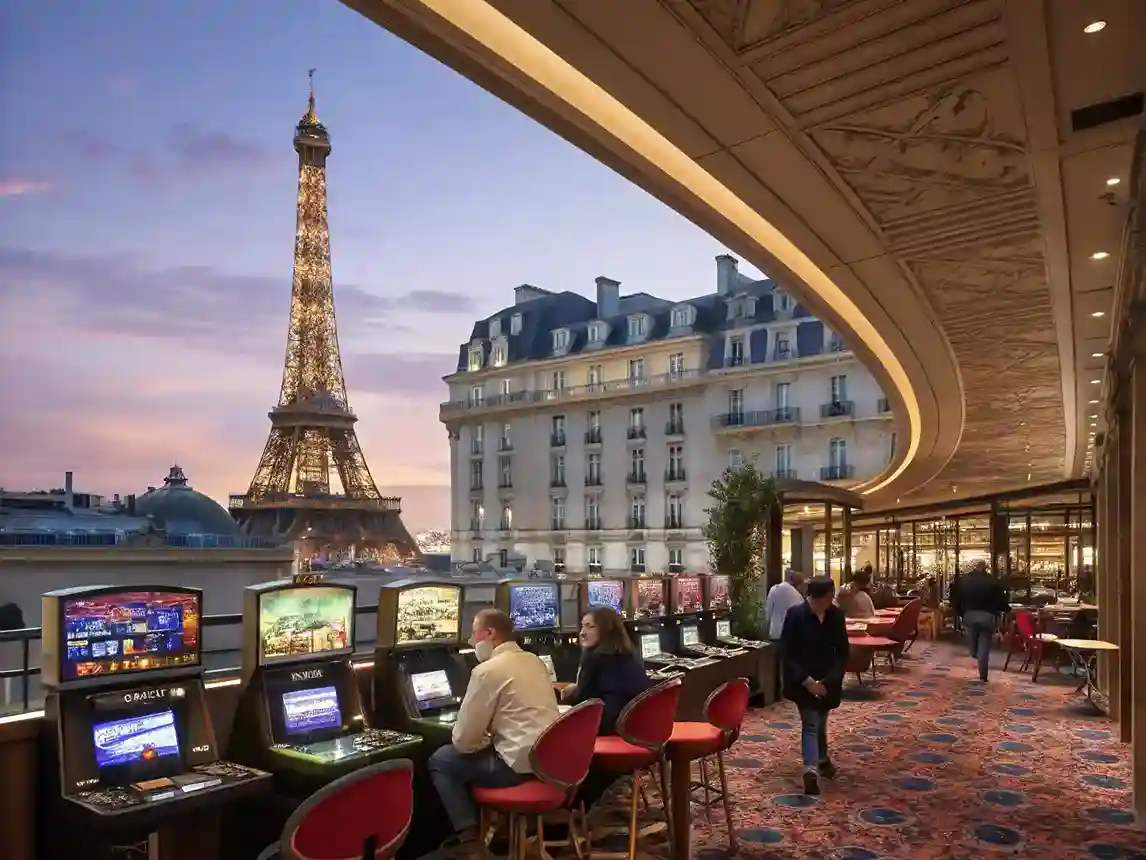
The background to this story is deeply French. Paris has long been an outlier in Europe: a city of luxury, tourism, and nightlife, yet not a city of casinos in the normal sense. The legal barrier goes back more than a century. Casinos have remained banned in Paris and, broadly speaking, within a 100-kilometer radius, with limited exceptions such as spa towns, which explains why Enghien-les-Bains became the major casino outlet for the region. That rule shaped the geography of gambling around the capital and pushed full casino activity outside Paris proper.
The gaming club model emerged as a workaround, but not a casual one. It was designed as a regulated alternative after the old Paris gaming circles had become associated with fraud, tax issues, and reputational problems. The state’s answer was not to let standard casinos into the city. Instead, it allowed a narrower, more controlled format centered on poker and certain banked table games. The idea was to offer a legal, supervised venue in place of the murkier ecosystems that had developed before.
For several years, that arrangement looked provisional. Operators lived with uncertainty, and the market never fully knew whether Paris gaming clubs were becoming a durable part of the city’s entertainment economy or just a temporary experiment. The turning point came with the 2026 finance law, which moved the regime out of that suspended state and gave the model a more stable footing. That legal clarification changed investment logic immediately: once operators can believe the format will last, they start building bigger, spending more, and thinking like long-term urban leisure brands rather than temporary license holders.
This matters for offline gambling across France because Paris is not just another local market. It is the country’s tourism showcase, a magnet for premium nightlife spending, and a city where hospitality and leisure trends tend to radiate outward. When Paris gets a viable land-based gambling format that feels modern and scalable, the whole sector pays attention.
What gaming clubs are and what they are not
A Paris gaming club is often described casually as a casino, but that label is misleading. Even when a venue uses the language of glamour, prestige, or big-play nightlife, it is still operating under a club structure, not as a full French casino. That distinction is essential. Paris clubs focus on poker and selected table games such as blackjack or punto banco. They do not reproduce the complete casino offer that players find in resort or regional properties, especially the mass-market pull of slot machines and the broad mix of automated and live games that define the classic casino floor.
That difference changes the audience. Traditional French casinos often live on a mixed economy: casual visitors, tourist traffic, event guests, dinner customers, slot players, table players, and local regulars. Gaming clubs, by contrast, are naturally narrower and more urban. They speak more directly to poker players, table-game enthusiasts, nightlife customers, and people who value atmosphere over volume. The product is less about wandering a giant floor of machines and more about choosing a table, staying for hours, ordering food and drinks, and treating the place as part of an evening out.
This is why the new Paris clubs feel less like mini-casinos and more like hybrid venues. Their identity often sits somewhere between private club, restaurant, late bar, poker room, and luxury gaming lounge. Operators are selling not only gambling, but also time, mood, and urban belonging. That sounds like branding language, yet it reflects a real structural truth: in a city where the full casino model is still blocked, the winning venue has to become socially attractive enough to compensate for the games it cannot legally offer.
The contrast with Enghien-les-Bains makes the point clear. Enghien remains a full-scale casino experience with slot machines, table games, electronic games, restaurants, bars, and event-led entertainment. It is still the closest answer to what many international visitors imagine when they hear “casino near Paris.” Paris gaming clubs are not trying to clone that model. They are creating a more concentrated and city-specific version of offline gambling, one that fits the capital’s legal constraints and its appetite for premium nightlife.
How the new clubs are changing the Paris experience
The strongest sign of change is scale. Early gaming clubs proved that there was demand for legal table-game venues in Paris. The newest generation is proving something bigger: there is demand for ambitious, high-visibility venues that feel like destinations. The best example is the Partouche Casino Club, which opened on Avenue de la Grande-Armée in May 2026. Reporting around the launch described it as a massive project, with thousands of square meters, multiple floors, a heavy staffing push, and a level of investment that signals confidence rather than experimentation.
That kind of opening changes the tone of the market. A club of that size does not merely absorb existing players; it reframes expectations. Suddenly, Paris gaming is not a niche activity tucked behind discreet doors. It becomes a visible part of the city’s leisure map, capable of attracting curious tourists, affluent locals, poker communities, after-dinner crowds, and people who might never have taken a suburban trip to a resort casino. In business terms, that is the crucial shift: clubs stop acting like substitutes and start acting like urban anchors.
Other clubs help show how broad the format has become. Club Pierre Charron presents itself as a live-gaming venue with poker and table games, alongside a bar, restaurant, and cigar-friendly lounge atmosphere. Club Circus Paris highlights daily opening hours, table play, and a steady event rhythm built around the poker calendar. Paris Élysées Club leans into location, prestige, and premium service near the Champs-Élysées. These are not identical products, but they share a common language: gaming as part of a stylish social outing rather than a purely transactional gambling visit.
For the Paris consumer, this matters because convenience and image drive behavior. A gaming club in the 8th or 17th arrondissement is easier to fold into an ordinary urban evening than a trip to a regional casino. You can have dinner, move into a game, meet friends, stay late, and leave without turning the outing into a dedicated excursion. That may sound minor, but it changes frequency. Once gambling becomes geographically easy and socially legible, it starts competing with other nighttime experiences, not just with other gambling venues.
A few visible trends explain why the club model is gaining ground so quickly.
- It fits Paris nightlife better than the resort-casino template.
- It attracts players who prefer live tables over slot-machine floors.
- It blends gambling with food, drink, and premium hospitality.
- It gives operators a format that can exist inside the capital’s legal boundaries.
- It creates a more modern, urban image for offline gambling in France.
Taken together, those points explain why the market conversation has become so lively. Clubs are not replacing French casinos everywhere, but inside Paris they are finally giving land-based gambling a format that feels native to the city instead of imported from spa towns, seaside resorts, or highway leisure zones.
Examples of Paris clubs and nearby offline casinos
The easiest way to understand the market is to place Paris gaming clubs beside traditional brick-and-mortar casinos. They belong to the same broad world of offline gambling, but they answer different consumer needs. The comparison below shows why the new clubs matter without pretending they have erased the importance of full casinos around the capital.
| Venue | Type | Location | What defines the experience |
|---|---|---|---|
| Partouche Casino Club | Gaming club | Paris 17th | Large-format urban club opened in May 2026; built around table gaming, nightlife scale, and destination-style positioning. |
| Club Pierre Charron | Gaming club | Paris 8th | Strong poker and table-game identity, plus restaurant, bar, and lounge-style amenities. |
| Club Circus Paris | Gaming club | Paris | Daily operations, tournament rhythm, and a strong poker-led entertainment calendar. |
| Paris Élysées Club | Gaming club | Paris 8th | Premium central address near the Champs-Élysées with blackjack, poker, punto banco, and service-driven positioning. |
| Casino Barrière Enghien-les-Bains | Full casino | Enghien-les-Bains | The only casino in Île-de-France; slots, table games, electronic games, bars, restaurants, and major-scale resort-style play. |
| Grand Casino de Forges-les-Eaux | Full casino | Forges-les-Eaux | Traditional casino linked to a broader leisure domain with hotels, spas, restaurants, and golf. |
The comparison makes one thing very clear. Paris clubs win on immediacy, centrality, and urban energy. Traditional casinos still win on breadth. If a player wants slot machines, electronic tables at scale, a resort feel, or a weekend package built around accommodation and leisure, the classic casino remains superior. If the player wants a polished evening in central Paris with live tables and a social atmosphere, the clubs are now the stronger proposition.
That is why it would be wrong to frame this as a direct war between Paris clubs and regional casinos. The more accurate reading is market segmentation. Clubs are absorbing a demand that was always present in the capital but never properly served under legal conditions. Casinos outside Paris still hold the broader recreational package. In practice, the French offline sector is becoming more differentiated, not less.
What this means for casinos outside Paris
For operators beyond the capital, the rise of gaming clubs is both a threat and an opportunity. It is a threat because high-value customers who once traveled for a gambling night can now stay in Paris. A central club with strong service, a recognizable brand, and a premium table-game offer can skim off urban demand that might previously have drifted toward Enghien or other destination venues. The more polished these clubs become, the more pressure they place on casinos that relied on proximity to the capital without actually being in it.
It is also an opportunity because clubs may broaden the total market for offline gambling. They can reintroduce land-based play to people who had shifted toward online products or simply stopped going to casinos because the experience felt inconvenient. A player who rediscovers live blackjack or poker in Paris may later become willing to visit a full casino for a larger evening, a weekend break, or a more varied gaming floor. In that sense, clubs can function as gateways as much as competitors.
The hospitality angle is especially important. Full French casinos still have a structural advantage when they are embedded in hotels, spas, restaurants, and broader resort ecosystems. Forges-les-Eaux is a good example of this model, with its casino tied into a larger leisure destination. Enghien, too, is not just a room with tables and machines; it is a more complete entertainment environment. Paris clubs can imitate some of that atmosphere, but they do not yet offer the same all-in-one escape.
This means the strongest regional casinos will probably respond not by copying Paris clubs, but by leaning harder into what clubs cannot fully provide: resort value, full-game diversity, event programming, overnight stays, and the feeling of leaving ordinary life behind. The clubs may own the urban night; the casinos still have a strong claim on the bigger outing.
Where the French offline market goes next
The next question is whether the Paris club model remains stable in its current form or expands further in ambition. The legal settlement of 2026 has made long-term planning easier, but it has not erased every debate around what these venues should be allowed to offer. Reporting around the sector has already pointed to discussion about the future scope of games, even while the existing framework clearly stops short of turning the clubs into ordinary casinos. That tension is likely to define the next phase of French offline gambling policy.
There is also the question of economics. The clubs generate meaningful tax revenue, yet the market has not been uniformly easy for operators. High costs, regulatory complexity, and interruptions in previous years showed how fragile the business could be under uncertain rules. The difference now is that larger operators seem willing to invest on the assumption that legal continuity and better brand positioning can finally make the model work at scale.
For players and observers, the most interesting development is not simply that Paris has more places to gamble. It is that France is testing a distinctly urban version of offline gambling: more curated than the old gaming circles, more fashionable than the stereotypical casino annex, and more tightly integrated into food, nightlife, and premium hospitality. This gives Paris something it lacked for years — not a casino renaissance in the literal sense, but a believable land-based gambling identity of its own.
In that sense, the city is bringing back big play without truly bringing back the old casino model. The clubs are not filling Paris with slot halls and roulette palaces. They are doing something more strategic. They are proving that offline gambling in France can still grow when it adapts to local law, local culture, and local nightlife habits. And that may be the most Parisian outcome possible: not imitation, but reinvention