
London has no shortage of grand openings, but not many of them arrive carrying the weight of a landmark, a regulatory turning point, and a wider debate about what nightlife in Europe should look like in the second half of the decade. That is why Genting’s planned launch at the London Trocadero feels bigger than a standard casino opening. It is not just another gaming floor coming to market. It is a bet on the idea that a prime city-centre venue can still work as a physical entertainment destination in an era shaped by online gambling, rising operating costs, stricter scrutiny, and changing consumer habits. Public reporting around the project points to a £40 million redevelopment of part of the Trocadero, with Westminster councillors having approved the plans unanimously and an opening target set for October 2026. Reports also describe a scheme with capacity for up to 1,250 people and a gaming floor of about 16,000 square feet within a wider redevelopment footprint of roughly 37,000 square feet.
That combination alone makes the story notable, but the real interest lies in what the opening represents. The Trocadero sits in one of the most visible and symbolic parts of central London, close to Piccadilly Circus, Leicester Square and the theatre district. This is not a peripheral gambling box aimed only at regulars who already know the market. It is a high-footfall urban stage with tourist traffic, local nightlife, hospitality demand and a built-in layer of memory. For years, the building has stood as a reminder of how quickly entertainment districts can rise, age and lose direction. Genting’s plan effectively says that a legacy site can be reintroduced not as a museum piece, but as a functioning modern leisure destination. That alone gives the opening a scale that goes beyond the UK casino trade press.
Why this opening matters beyond London
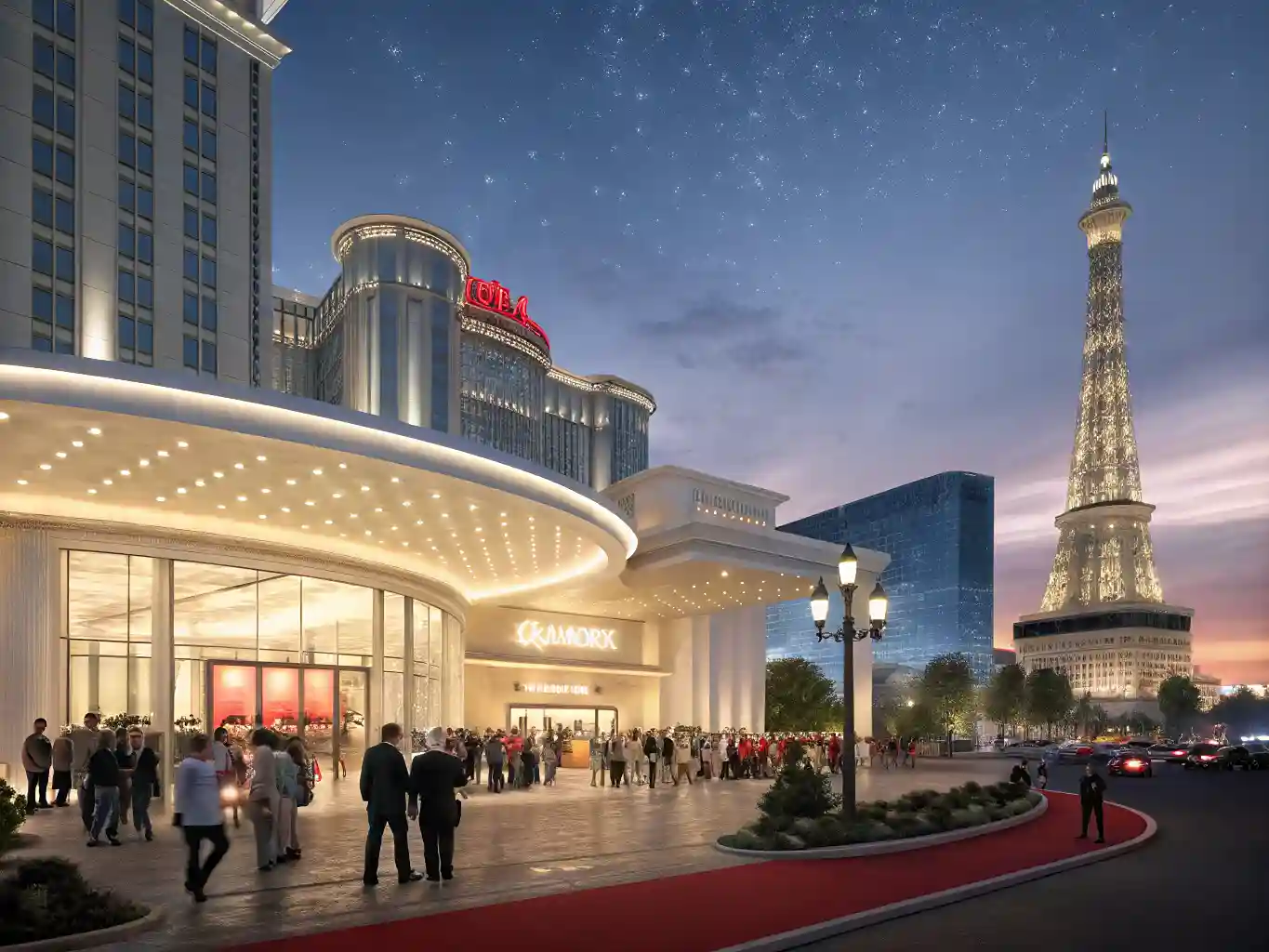
Europe sees plenty of casino investment, but a great deal of it happens in resort settings, regional gaming markets or projects with limited mainstream cultural visibility. The Trocadero is different because it sits inside one of the most recognisable urban entertainment zones on the continent. A reopening there would not simply matter to London gamblers. It would be watched by venue developers, nightlife operators, tourism strategists, competing casino groups, city planners and policymakers who want to know whether premium central locations can still sustain large-format physical leisure concepts.
The timing also matters. Since July 2025, the UK’s long-awaited land-based casino reforms have been in force, part of a broader attempt to modernise outdated rules and give brick-and-mortar operators more flexibility while retaining safeguards. Government and Gambling Commission materials describe the changes as a way to help the sector grow, partly in response to post-pandemic pressure and the structural challenge posed by online gambling. That means the Trocadero is arriving in a climate where the state has already acknowledged that the old model needed updating. In practical terms, the opening can be read as one of the clearest real-world tests of whether that modernisation is enough to encourage genuinely ambitious investment in land-based casino venues.
There is also a reputational angle. Genting is not entering the UK from scratch. Its own corporate materials say it operates 32 casinos across the country and positions itself as the leading operator in London, where it already has several high-profile venues. Because of that footprint, the Trocadero project is not a speculative one-off. It looks more like a statement about how Genting sees the future of the city market: less hidden, less clubby, more integrated with food, drink, events and broader night-out behaviour. That matters in a European industry still trying to decide whether the best growth path is pure gaming or mixed-use hospitality.
The building gives the project a different kind of gravity
A casino opening becomes more compelling when the venue already means something to the city. The Trocadero does. It is one of those London names that travels across generations, even if people remember it for different reasons: entertainment, arcades, restaurants, novelty, decline, reinvention. That long cultural afterlife is exactly why the site has more emotional charge than a new-build project in a less loaded location. The building carries a public memory that Genting can tap into without having to manufacture a story from nothing.
That history changes the tone of the opening. For many projects, the sales pitch begins and ends with amenities. Here, the narrative is also about urban revival. Supporters of the plan have framed it as a way to reactivate underused space in a Grade II-listed landmark and reconnect the building to the rhythms of the West End. Critics, unsurprisingly, focus on gambling harm, crowd impact and the symbolism of placing a large casino in such a central tourist area. Both reactions show why the scheme has weight. Nobody is arguing over a minor fit-out on a secondary street. This is a visible test of what kind of late-night economy London wants to encourage.
The physical scale helps too. Media coverage has consistently described a multi-level concept including casino space alongside restaurants and bars, rather than a narrow, single-purpose operation. That matters because it fits the way successful urban venues now compete. Very few people choose a destination purely for one activity anymore. They choose a sequence: meet, eat, watch, play, stay out longer, and decide on the night where to spend more time. A Trocadero venue that understands that pattern is immediately more relevant than an old-fashioned gaming room that expects the gaming product alone to do all the work.
There is another reason the location changes the stakes. In Europe’s major capitals, truly central sites are becoming harder to activate at large scale without either overwhelming local communities or falling into generic retail formulas. If Genting can make the Trocadero work as an entertainment-led casino destination in this environment, the project will be studied as a model. If it struggles, that lesson will travel just as fast.
Genting is selling a night out, not only a gambling floor
The most important strategic point may be the simplest one: successful casinos in major cities increasingly market themselves as places to spend an evening, not just places to gamble. Genting’s own public-facing materials already lean heavily into that language across its UK estate, describing many of its properties in terms of nights out, live entertainment, dining, events and social atmosphere rather than gaming in isolation. That matters because the Trocadero will live or die not only on table yield or machine revenue, but on whether it can behave like a magnetic leisure address in a district where people already have endless alternatives.
That framing changes how the opening should be understood. It is not simply about moving chips across felt in a famous postcode. It is about whether a casino operator can claim a credible place in the modern city-centre experience economy. In the West End, that means competing not only with other casinos, but with theatres, cocktail bars, rooftop venues, immersive attractions, sports screenings, branded restaurants and new hybrid spaces that refuse to fit one category. The Trocadero project looks like Genting’s answer to that pressure.
A few features explain why the opening has the potential to land so strongly with the market.
- The site is visible, central and naturally connected to existing tourist and nightlife traffic.
- The project scale is large enough to feel like a destination, not a niche room.
- The operator already understands London and does not need to learn the city from zero.
- The wider policy environment now gives land-based casinos more room to modernise.
- The building itself has narrative value that newer venues cannot easily copy.
Put together, those points explain why the launch could become more than a local business story. It can become a symbolic moment for land-based gaming in Europe, especially if the finished product looks polished enough to attract people who would never describe themselves as regular casino customers.
That does not mean success is automatic. The same qualities that make the opening headline-worthy also raise expectations. People will judge the venue as architecture, as hospitality, as operations, as urban planning, and as a statement about the future of gambling in a dense city centre. Few openings face so many audiences at once.
What the project says about Europe’s offline casino market
For years, the easy story was that online would keep taking share while land-based operators either retreated into premium niches or relied on legacy customers. That story was not completely wrong, but it was incomplete. Physical venues still matter when they offer something the screen cannot: atmosphere, ritual, visibility, social proof, live events, impulse visits, memorable design and a feeling of occasion. The challenge is that mediocre venues no longer get much credit for simply existing. They need to justify themselves.
The Trocadero project appears built around that reality. It does not seem positioned as a defensive relic of an older market. It reads more like an attempt to create a flagship for the post-reform, entertainment-heavy, city-centre casino model. That is a useful signal for Europe because many operators across the region are wrestling with the same question: what exactly is a land-based casino for in 2026?
The answer is increasingly not “just gambling.” It is a hospitality platform with gambling at the centre but not as the sole reason to enter. That shift is visible far beyond London. In many European cities, operators are investing in restaurants, sports viewing, event programming and broader lifestyle positioning. Genting itself does this across parts of its estate, promoting promotions, live music, food and themed nights alongside gaming. In that sense, Trocadero is less an exception than a high-profile expression of an industry-wide direction.
The table below makes the project’s importance easier to understand at a glance.
Before the headline language around the opening takes over, it helps to look at the basic ingredients that make the Trocadero scheme unusually consequential for the offline market.
| Factor | What is publicly reported | Why it matters |
|---|---|---|
| Location | London Trocadero near Piccadilly Circus and Leicester Square | Gives the venue continent-level visibility and exceptional footfall potential. |
| Operator | Genting UK, a major UK casino operator with a strong London presence | Reduces execution risk compared with a newcomer testing the market. |
| Investment | Around £40 million | Signals that this is a flagship redevelopment, not a cosmetic refresh. |
| Opening target | October 2026 | Creates a clear market milestone and a focal point for industry attention. |
| Scale | Roughly 37,000 sq ft redevelopment, including about 16,000 sq ft of gaming floor | Large enough to function as a destination venue with multiple revenue streams. |
| Capacity | Up to 1,250 people, according to reporting on the approved plan | Suggests meaningful event, nightlife and hospitality ambition. |
| Policy backdrop | UK land-based casino reforms came into force in July 2025 | Makes the opening a real-world test of whether reform can unlock investment. |
| Public debate | Support framed around revival and jobs, criticism around gambling harm and local impact | Ensures the opening carries political and cultural significance, not just commercial value. |
Those points help explain why the Trocadero launch could become a reference case for the wider European sector. If it performs well, the lesson will be that flagship urban casino projects still have room to thrive when they combine heritage, hospitality and a modern regulatory framework. If it underperforms, critics will argue that central-city casino expansion remains an expensive answer to a market already reshaped by digital behaviour. Either way, the opening will say something important about the future of offline gaming.
The opportunity is huge, but so is the scrutiny
Projects with this much visibility never open into a vacuum. They open into argument. That is especially true in gambling, where every new development is judged through two very different lenses at once. One lens looks at jobs, investment, tourism and urban revival. The other looks at addiction risk, local disorder, money-laundering concerns, consumer protection and the message a city sends when it gives a large casino a premium address. The Trocadero will be judged through both.
That tension is already visible in the public record around the scheme. Reporting on the Westminster approval emphasised both the project’s ambition and the objections raised about social harm and concentration of gambling activity in the West End. At the same time, official materials around the 2025 land-based reforms repeatedly stress that modernisation is meant to happen alongside safeguards rather than instead of them. That means the Trocadero will face pressure not merely to look impressive, but to operate in a way that convinces sceptics the new model can be commercially successful without becoming careless.
This is where the project becomes bigger than Genting alone. The venue will act as a shop window for the whole sector. If customer onboarding, staff intervention, identity checks, responsible gambling tools, venue design and late-night management all look robust, the opening will strengthen the argument that modern city casinos can be tightly run. If anything goes wrong early, critics will not treat it as a local operational slip. They will treat it as evidence that the wider policy shift was a mistake.
There is also an economic risk. Central London is one of the hardest environments in Europe in which to make a big venue work consistently. Rent pressure, staffing costs, compliance demands and intense competition all raise the bar. A site can be iconic and still fail to convert that into repeat spending. That is why the project needs more than launch-week excitement. It needs a durable operating model, strong programming, disciplined cost control and a reason for customers to return after the novelty fades.
Why it could still become Europe’s defining offline launch
Despite the risks, the argument for this being Europe’s standout offline gaming opening is strong. Few projects bring together so many powerful ingredients at once: a famous address, a heritage building, a major operator, meaningful capital expenditure, a clear post-reform policy backdrop, intense public visibility and a concept that appears designed for the broader leisure economy rather than a shrinking specialist niche. That is why the story has traction well beyond gambling circles.
The launch also arrives at a moment when Europe’s physical casino market needs proof of relevance. Not theory, proof. It needs venues that can show why people still leave home, spend hours in a real place, and treat gambling as one part of a richer social experience. If Genting gets the product right, the Trocadero could become exactly that proof. It would show that land-based gaming can still produce theatre, urban energy and destination value in an era when so much consumer entertainment has moved to the phone.
The deeper reason the opening matters is that it touches several industries at once. It is a gambling story, but also a London story, a nightlife story, a tourism story, a real-estate story and a regulation story. That breadth is rare. Most casino launches stay inside trade media. This one has a realistic path into mainstream conversation because the venue sits where millions of people already look, move and spend. That changes everything.
A successful opening would not mean every European city suddenly needs a Trocadero-style project. It would mean something more useful: that the best land-based venues are no longer those that ask customers to enter a sealed gaming world detached from the city, but those that plug directly into how modern cities eat, move, celebrate and stay out late. In that sense, Genting’s Trocadero is not just reopening part of a building. It is testing a model.
That is why the opening could become the biggest offline gaming event of the year in Europe. Not because it will necessarily be the largest casino. Not because London lacks entertainment. But because this project sits at the intersection of memory, money, regulation and reinvention. When a venue can carry all of that at once, it becomes more than a launch. It becomes a marker for where the market thinks it is going next.